
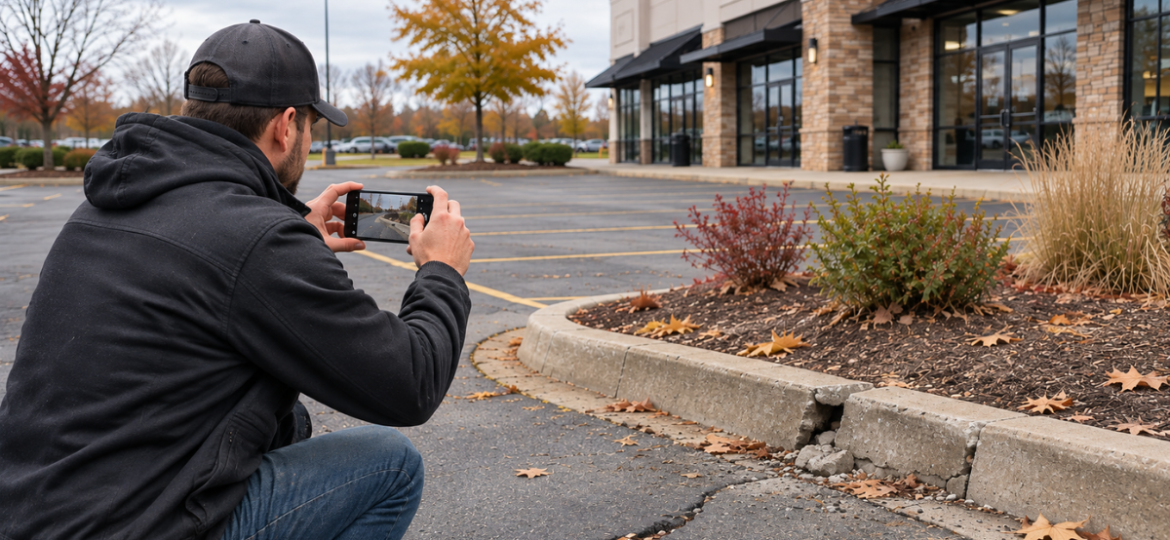
Preseason snow inspections: what to document before the first storm
Spring plow damage disputes are won or lost in the fall. Here is the checklist multi-site facilities teams use to build a baseline before the first plow ever touches the lot.

Every spring, facilities teams discover cracked curbs, damaged landscape islands, and displaced parking stops.
The challenge? Determining what damage happened during snow season and what was already there.
Without a documented baseline, it's difficult to hold the right party accountable.
A preseason snow inspection is that record. It takes a dated, photo-by-photo snapshot of every surface a plow, loader, or salt spreader can damage, so the spring conversation starts with evidence instead of memory.
Most preseason inspections run from September through November. If your first major storm hasn't hit yet, there's still time.
Why do preseason snow inspections matter for multi-site facilities teams?
When you're responsible for hundreds or thousands of properties, tracking existing damage across every parking lot isn't easy. Without consistent documentation, it's difficult to determine what changed during snow season and who may be responsible.
A preseason inspection helps facilities teams:
- Establish existing conditions before snow removal begins.
- Reduce uncertainty around damage disputes with dated photo documentation.
- Identify potential hazards that could interfere with plowing and snow removal.
- Maintain consistent records across an entire property portfolio.
- Prioritize repairs by comparing property conditions before and after winter.
For multi-site operators, the real value is having a reliable record of every property's condition without sending internal teams to inspect each location.
What should a preseason snow inspection document?
A preseason snow inspection should document everything snow equipment can damage, plus the hazards a crew needs to know about before working a site in the dark.
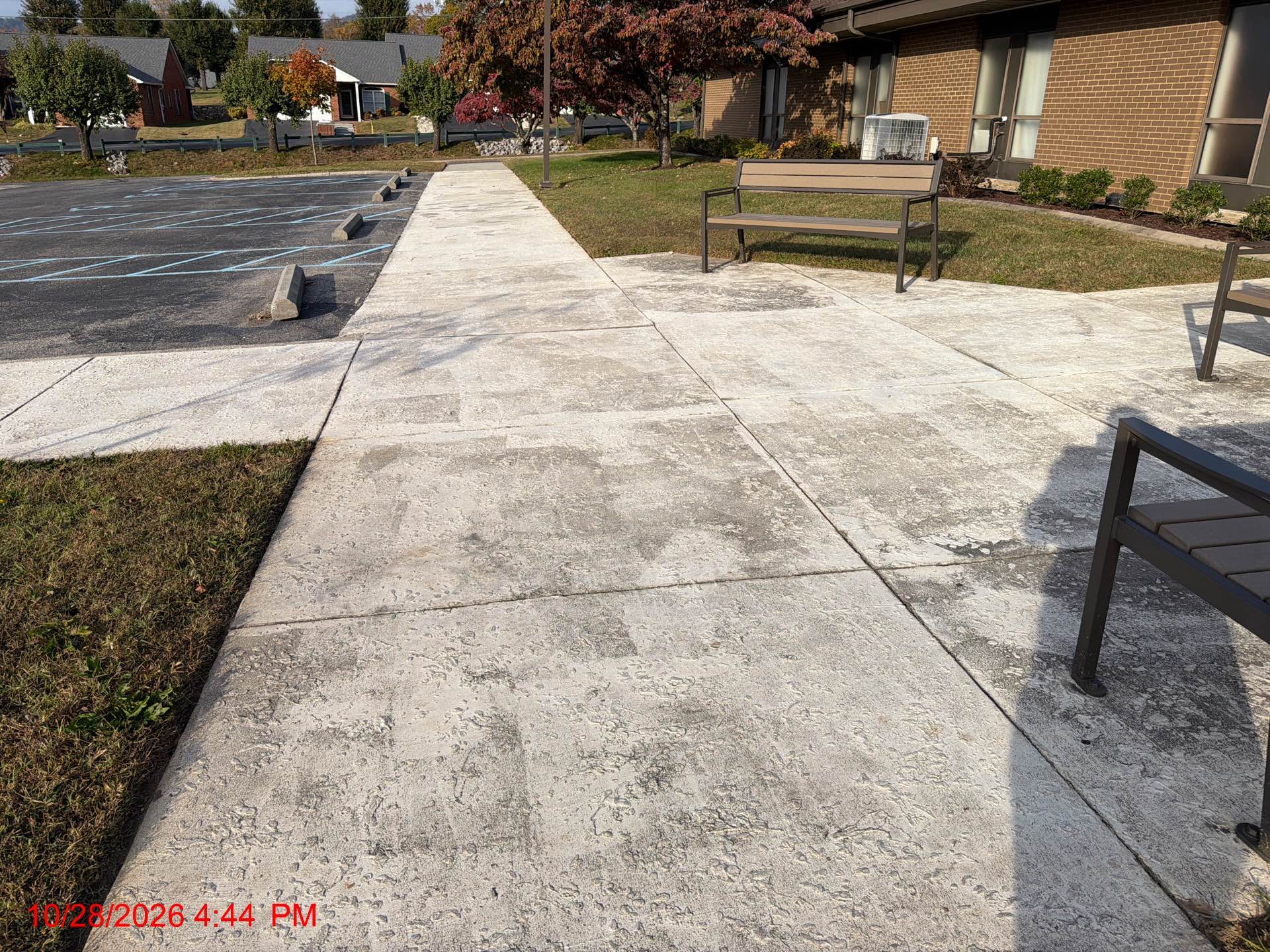
That means curbs, islands, car stops, pavement, turf edges, and fixed objects, captured in dated photos from angles you can repeat in the spring.
Here is what belongs on the list at every site.
- Curbs and islands. Chips, cracks, missing sections, and paint condition. These take the most plow hits and drive the most spring disputes.
- Car stops. Position, cracks, and any that are already missing. A car stop shoved out of place in April means nothing without a November photo.
- Pavement and striping. Existing potholes, alligator cracking, and faded lines, especially at drive aisles and where asphalt meets concrete.
- Turf and landscape edges. Lawn and bed edges along drive lanes and walkways. Scraped turf and salt-burned plantings are easy to blame on the wrong crew.
- Fixed objects. Light pole bases, bollards, hydrants, signs, fences, dumpster enclosures, and cart corrals.
- Building edges and access. Sidewalks, entry ramps, downspouts, and loading dock bumpers.
- Drainage. Catch basins and drains, so snow piles don't end up on top of them and refreeze across the lot.
- Snow storage areas. Where piles are supposed to go, and what sits underneath or beside them.
- Hidden hazards. Low obstacles that vanish under a few inches of snow. Note whether they're staked or marked.
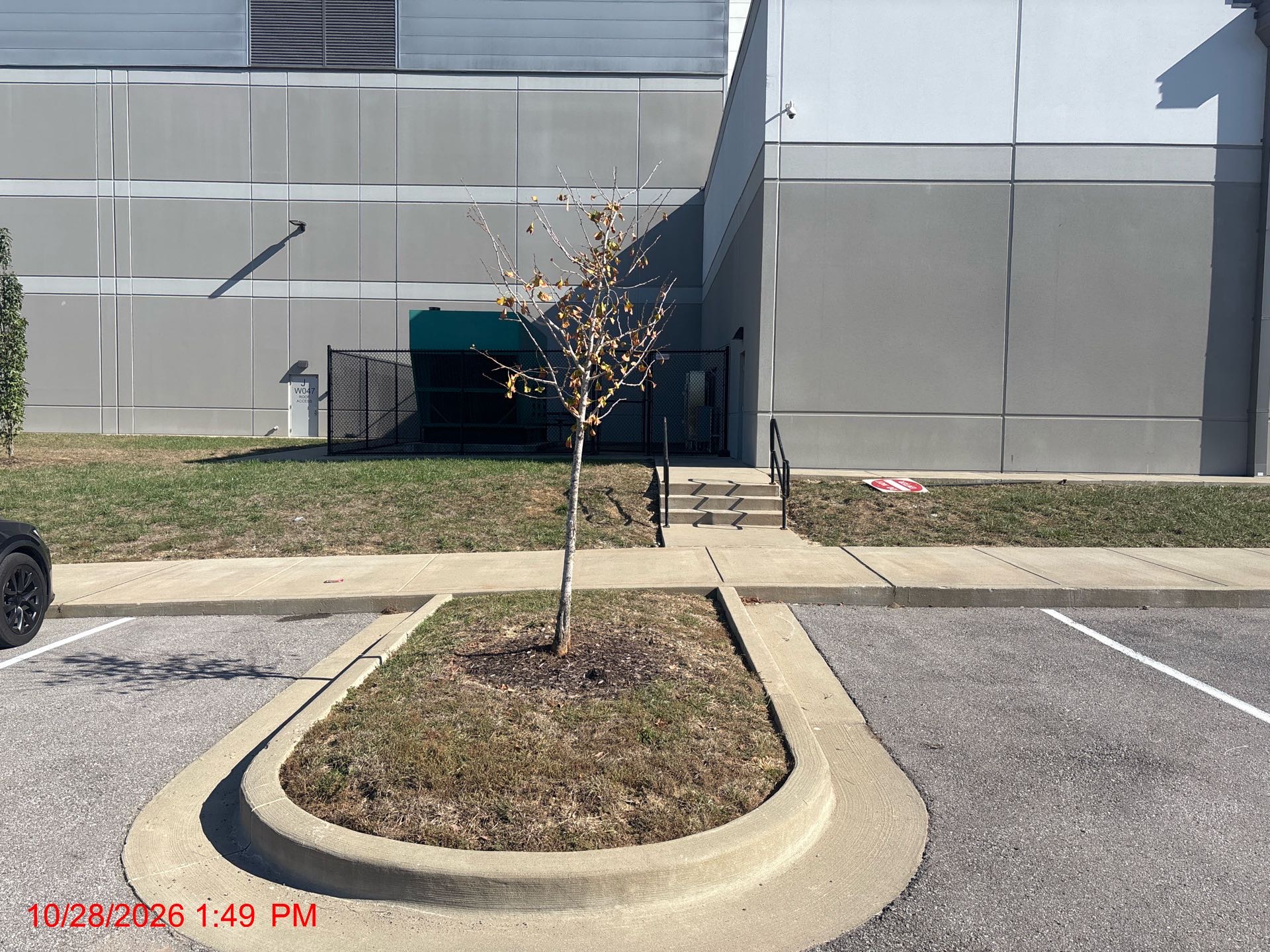
How to take photos that still hold up in spring
The checklist only matters if the photos can be compared later. Photos need to clearly document the condition and location of each asset.
- Wide, then close. One wide shot to show where you are, then close shots of each item.
- Same angles, every time. Use a fixed shot list per site so the spring photos line up with the fall ones.
- Date and location on every photo. A photo without a verified time and place is just a picture.
- One template across the portfolio. If every site is documented differently, nobody can review hundreds of them quickly.

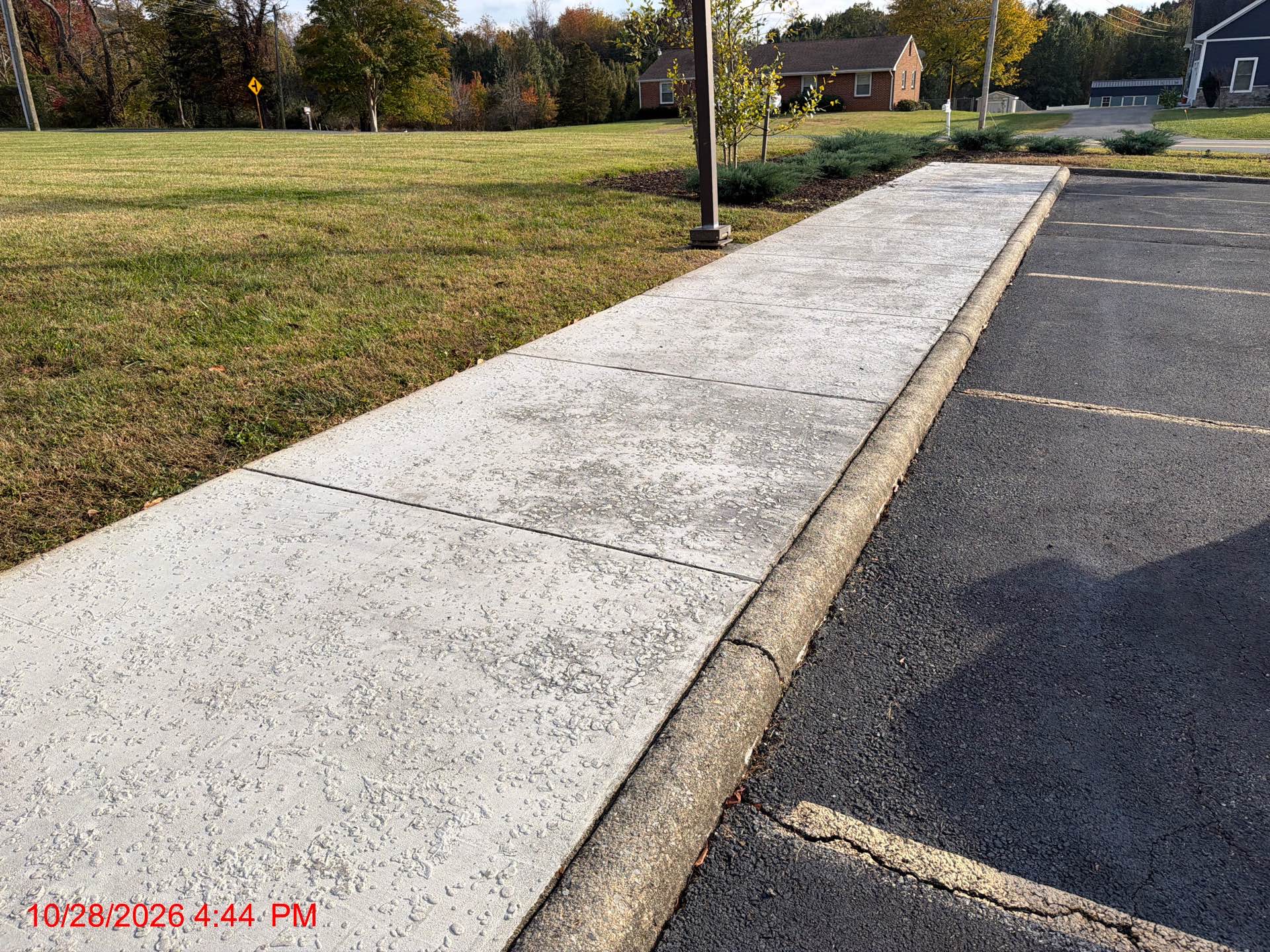
How do you prove plow damage after the season ends?
You prove plow damage by comparing two dated records of the same spot: one taken before the season and one taken after it. If the curb was intact in the November photo and broken in the April photo, the conversation moves from opinion to evidence.
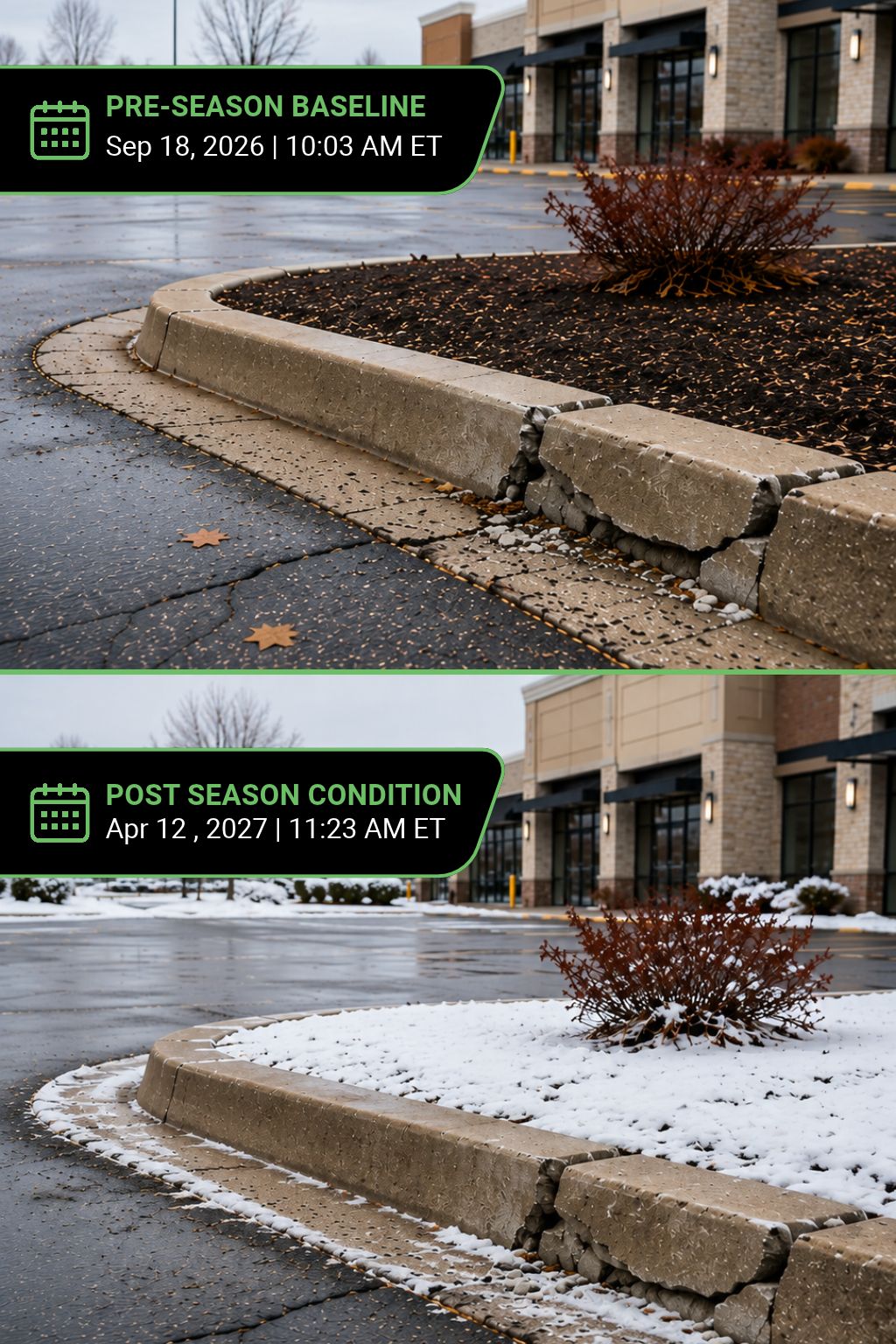
That makes the post-season inspection just as important as the preseason one. A few things make the comparison work.
- Inspect right after the last melt. Get the post-season photos before landscapers and paving crews start spring work. Once someone else touches the site, the damage gets harder to assign.
- Match the fall shot list. Same items, same angles. Consistent documentation makes before-and-after comparisons easier.
- Put the baseline in the contract. Tie damage responsibility to documented preseason condition, and spell out how and when the contractor reports damage during the season.
- Review by exception. Flag the sites where something changed. Don't make anyone scroll through every photo from every location.
Several national retailers already write preseason and post-season inspections into their snow contracts. Teams that run both often get a second payoff: the spring photos double as parking lot condition data for capital planning.
That fairness matters. A good snow vendor would rather have a clear record than an argument, and documentation that cuts both ways is easier for everyone to accept.
Should preseason photos come from you or the snow contractor?
Ideally both, but the record you rely on in a dispute should come from someone other than the party it might be used against. Contractor photos are useful, but when the crew that may cause the damage also documents the starting condition, the record is easy to question.
Here's how the two usual sources compare.
| Source | Where it helps | Where it falls short |
|---|---|---|
| Snow contractor | Already on site and knows the plow routes. | Angles, dates, and storage vary by crew. In a dispute, it's their word on their own work. |
| Your own team | Fully trusted and knows what matters at each site. | Doesn't scale. A small team can't walk hundreds of sites in a few fall weeks. |
Independent documentation gives both parties a reliable record to reference.
When damage is discovered months after snow season, having an independent record can make all the difference. With iVueit, local Vuers capture standardized, timestamped photo documentation before the season begins. Facilities teams get consistent visibility across their portfolio without relying solely on contractor reports or sending their own employees to every location. The result is an unbiased record of property conditions that both parties can reference when questions arise.
The two sources don't have to compete. Your team still decides what matters at each site. The contractor still knows the routes and keeps their own photos. The independent record sits between them, and it's the one both sides check when a curb turns up broken in April.
That keeps the conversation about the evidence instead of about who's telling the truth. Clear records help protect both property owners and contractors.
Is it too late to run a preseason snow inspection?
No. Until the first plow touches the lot, a baseline is still a baseline, and a partial one beats none.
If time is short, start with the sites most likely to end up in a dispute.
- Sites with a damage history. Last spring's arguments tend to happen again at the same addresses.
- Tight lots with lots of curbs and islands. More edges means more hits.
- Sites with a new snow contractor. Nobody has a shared memory of what the lot looked like.
- Sites you haven't seen in months. If you don't know their condition now, you won't know what changed later.

What does a baseline make possible during a storm?
Once every site has a documented starting point and a standard shot list, checking them during the season gets much faster. Vuers know what to capture, and reviewers know what normal looks like.
In one multi-state storm response, 140 sites across 4 states were verified in 3.5 hours, and 13 sites were flagged before any staff were sent.
That's the real value of preseason work. It turns snow documentation from a pile of photos into a short list of the sites that actually need attention.
Preseason snow inspection questions
What is a preseason snow inspection?
A preseason snow inspection is a dated photo record of a site's condition before snow season starts. It documents curbs, islands, car stops, pavement, landscaping, and fixed objects so any damage that shows up in spring can be compared against a known starting point.
When should preseason snow inspections be done?
Most preseason snow inspections happen between September and November, after fall landscaping work and before the first plowable storm. If the first storm hasn't arrived yet, it isn't too late. Prioritize sites with a damage history or a new snow contractor.
What should a preseason snow inspection checklist include?
A preseason snow inspection checklist should include curbs and islands, car stops, pavement and striping, turf and landscape edges, light pole bases and bollards, hydrants and signs, sidewalks and ramps, drains, snow storage areas, and hidden hazards that disappear under snow. Each item should be photographed wide and close from repeatable angles.
How can I verify snow removal compliance at multiple locations?
Start with a standard shot list and a preseason baseline at every site, then use Vuers to capture dated, location-verified photos before, during, and after the season. Reviewing by exception, so only the sites with problems reach your desk, is what makes it workable across a large portfolio.
Who is responsible for plow damage to curbs and landscaping?
It depends on the snow contract, but responsibility usually comes down to documentation. If a preseason photo shows a curb intact and a post-season photo of the same spot shows it broken, the evidence points to the season's work. Without a baseline, the question is usually impossible to settle.
Do post-season snow inspections matter as much as preseason ones?
Yes. The preseason inspection only proves damage when it has a post-season inspection to compare against. Run the post-season inspection right after the last melt, before spring landscaping or paving work changes the site, and use the same shot list as the fall.
See what a preseason baseline looks like
iVueit sends Vuers to capture standardized photo and survey documentation at every site in your portfolio. Our Snow & Ice Compliance Vue covers preseason, in-storm, and post-season checks, built to support the contract compliance your snow program depends on.
