
Your sites look fine at 2 PM. Who checks them at 10?
Every site looks fine at 2 PM. The pole light that's been out for three weeks only shows up after dark, when nobody from facilities is there to see it.

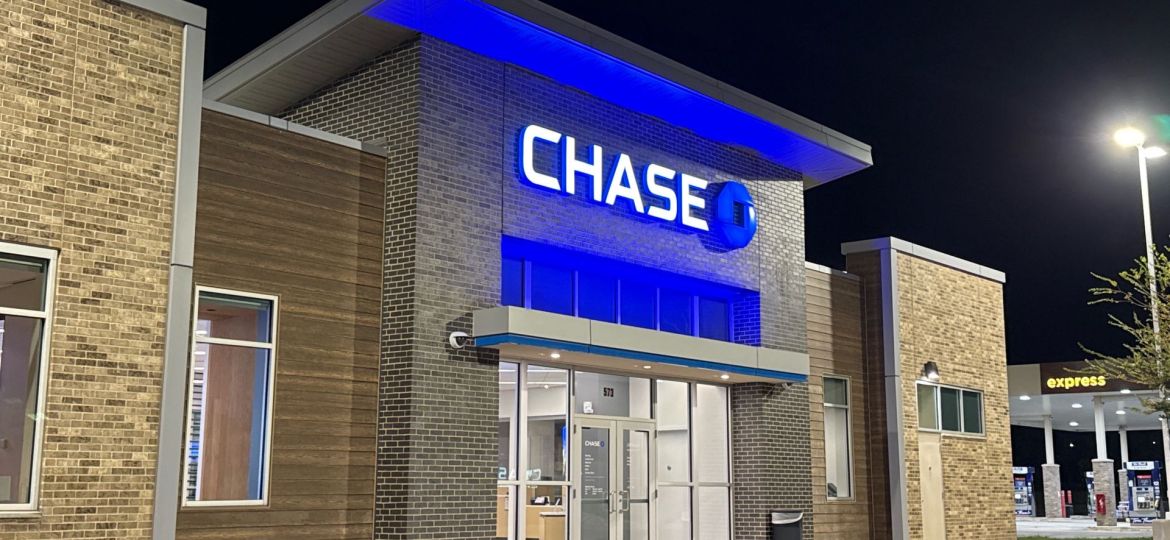
Building sign close-up at 10:56 PM. Every letter and the logo lit.
An FM leader at a 1,500-location company described it on a call with us. The facility manager is on a plane home. The branch manager locked up at five. Until someone opens the next morning and mentions the lot was dark again, nobody knows.
"We have no idea what the lighting looks like at night."
FM leader, 1,500-location company
The same gap shows up when sign and lighting work gets done. Crews install in daylight. A signage project manager put it plainly: his installers start at 8 AM, and "they're not going to wait around until 8 PM to get some night photos." So the job gets closed out without anyone confirming the one thing that matters about an illuminated sign: that it lights up.
A nighttime lighting audit closes that gap. Someone walks the site after dark and photographs every sign, light, and fixture as it actually looks lit, so you know what's working, what's out, and what needs a vendor, without sending your own team out at 10 PM.
What should a nighttime lighting audit check?
Every illuminated sign and every exterior light a customer, employee, or passing driver would notice after dark, photographed near and far from each side. Here's what that looked like at a bank branch in El Paso, walked at 10 PM by a Vuer, the vetted field inspector on site, the same week new sign work was finished.
- Building signs and logos. Every letterset and logo on every side of the building, straight on, near and far. Near shots show whether a single letter or section is out. Far shots show how the building reads from the road.
- Pylon and monument signs. All four sides of every freestanding sign, at every entrance. These are the signs drivers actually see, and the ones most likely to sit on their own timer or circuit.
- Drive-up lanes and ATMs. Lane designators, clearance signs, ATM faces, and the lighting around each ATM and canopy. These are the spots people use alone, at night.
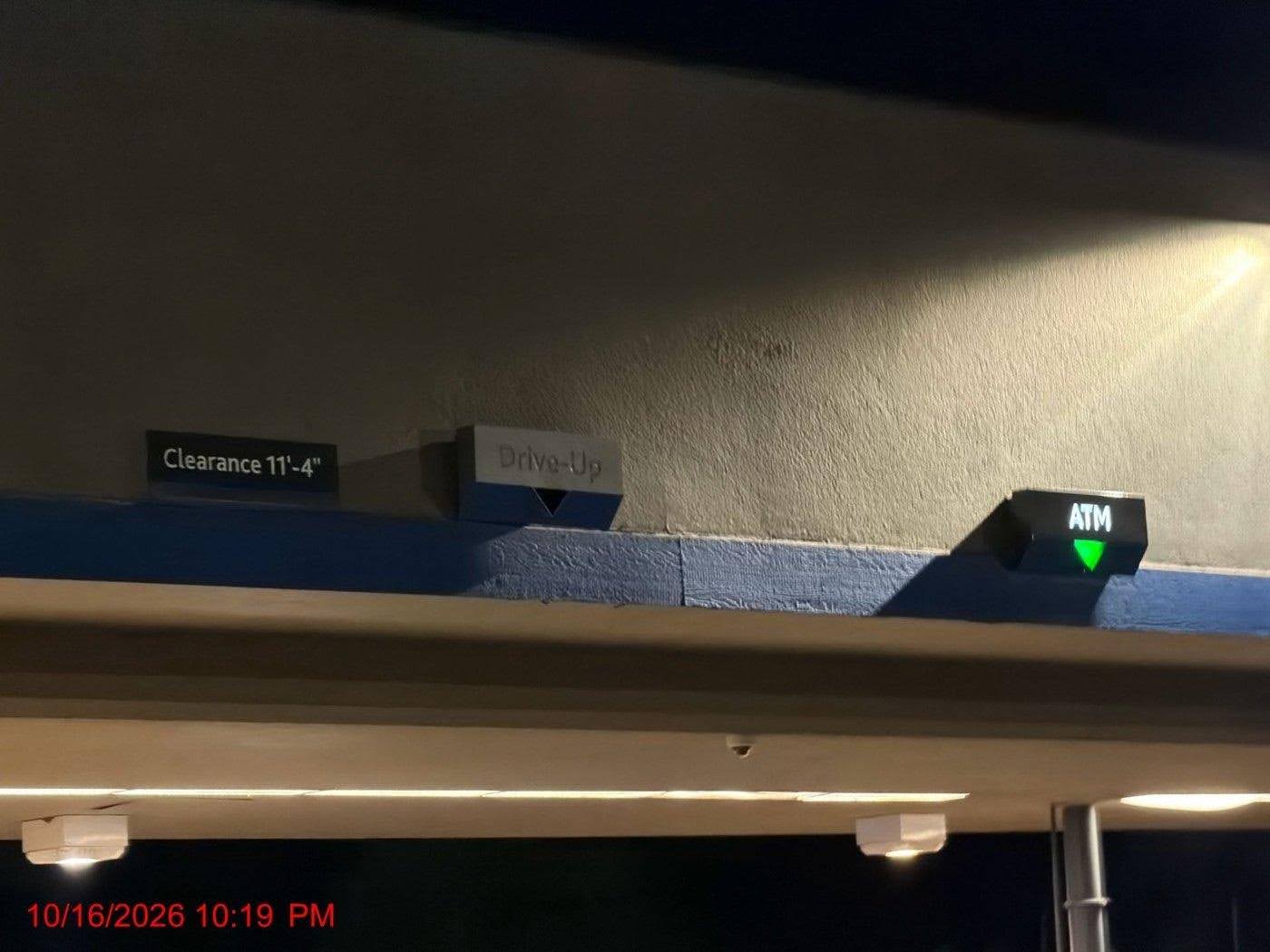
Lane designators and clearance sign.

Drive-up ATM, screen and lane light on.
- Parking lot and building lighting. Pole lights, wall packs, soffit and canopy lighting, and floodlights. A walk around the full property catches the fixture nobody remembered was there.
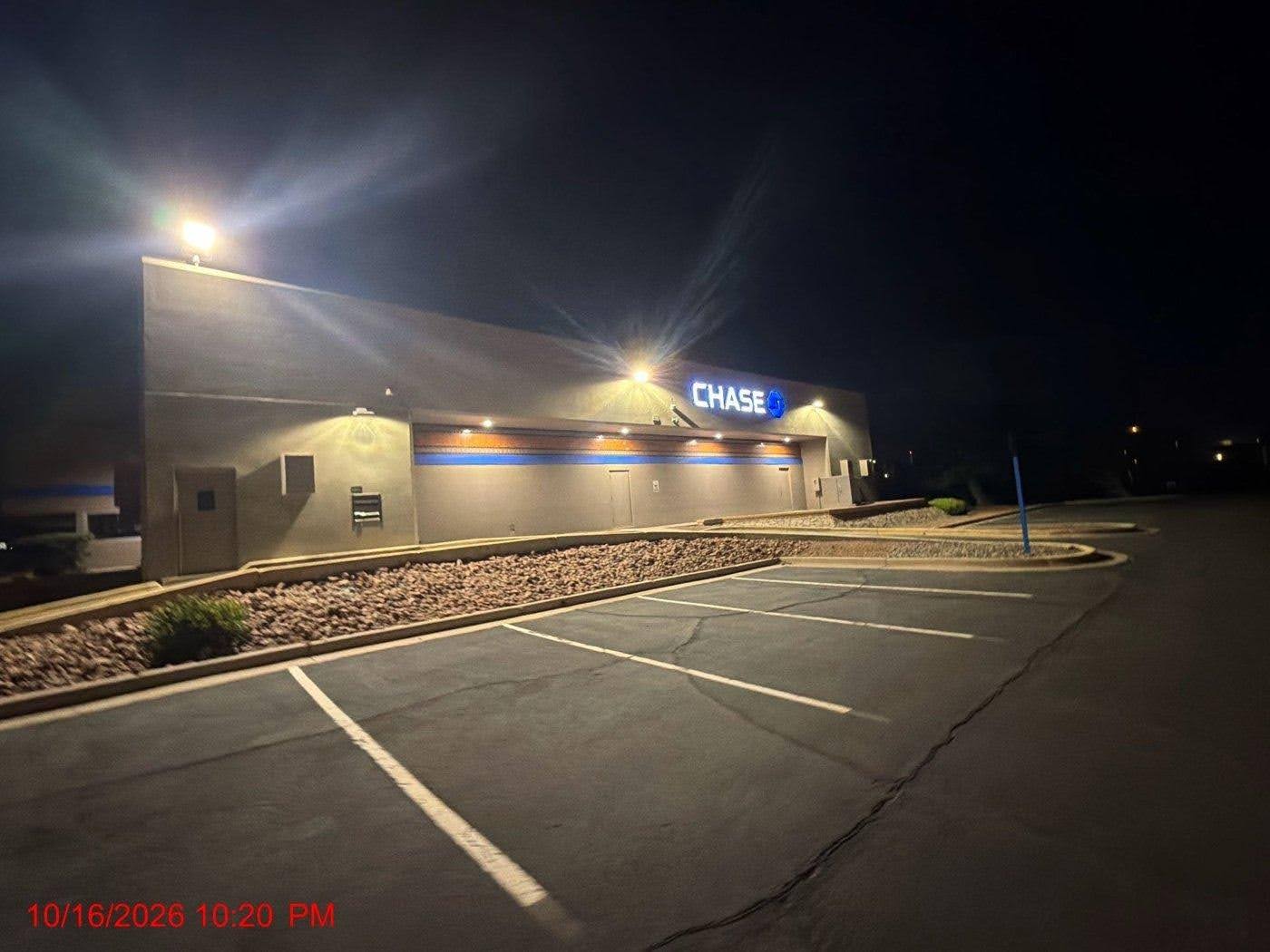
Wall packs and building lighting along the parking lot.
- Anything else that should be lit. The last question on the checklist asks the Vuer to walk the whole property one more time for any illuminated sign that wasn't already covered.
What did this audit find?
Almost everything was lit. The building signs on every side were glowing. The monument sign at the lot entrance was bright. The drive-up ATMs, canopy lights, and parking lot fixtures were all on.

LitMonument sign, 10:18 PM.

DarkPylon sign, 10:15 PM. Flagged by the Vuer.
The pylon sign at the other entrance was dark.
The Vuer flagged it and photographed it from every side. It's the tallest sign on the property, and the one passing drivers are most likely to see. In daylight it looks perfect, so a daytime completion photo would have shown a finished job.
Why it matters: an unlit sign doesn't announce itself.
It quietly stops doing its job until someone happens to drive by after dark and mention it. Here, the site's FM team and the sign vendor know the same week, with photos to start from.
The photos don't say why it's out. It could be a timer, a photocell, a breaker, or a failed component. They do mean the first truck roll goes out knowing which sign, which sides, and what everything else on the site looks like, instead of driving out to find out.
Why does parking lot lighting come up in liability reviews?
Because the lot, the walkway, and the ATM are where people get hurt or feel unsafe after dark. When an incident happens, one of the first questions is whether the lights were working. Without a recent, timestamped record, the honest answer is often "we think so."

Canopy lighting over a drive-up ATM.
A nighttime audit gives you that record: GPS-verified, timestamped photos of every fixture, taken after dark, on a known date. It also gives you something better than a record.
It gets the outage fixed before the incident, not explained after it.
How often should exterior lighting and signage be audited?
There's no single right cadence, but multi-site FM teams tend to build around three triggers.
The night after any sign or lighting work
This is the one most programs skip. The job is closed out on daylight photos, and nobody confirms illumination until a complaint comes in. A same-week night check turns "installed" into "working."
Before the shortest days of the year
December has more after-dark hours than any other month, right in the middle of holiday traffic. An audit in November or early December catches outages while they matter most.
On a recurring schedule
Monthly or quarterly night audits across the portfolio catch the slow failures: the pole light that went out three weeks ago, the letter that's been flickering since summer.
The scale is what makes this hard to do with your own people.
One signage program ran across 277 locations in 9 states with about a 30-hour average turnaround.
Nobody from facilities had to stay late or get on a plane to make that happen.
Frequently asked questions
What is a nighttime lighting audit?
A nighttime lighting audit is a walkthrough of a commercial property after dark that photographs every illuminated sign and exterior light as it actually looks lit. It shows which signs, letters, and fixtures are working and which are out, so repairs can be dispatched without a site visit.
What does a nighttime lighting audit include?
Typically building signs and logos on every side, pylon and monument signs, drive-up lanes and ATMs, parking lot pole lights, wall packs, canopy and soffit lighting, and a final sweep for any other illuminated sign. Each item is photographed near and far, with GPS and a timestamp.
Why can't sign installers just take night photos?
Most install crews work in daylight and move on to the next job. Sending a crew back after dark means overtime and a second trip, so the job is often closed out on daytime photos that can't show whether the sign lights up.
How often should exterior lighting be checked?
At minimum, the night after any sign or lighting work and once before the darkest months. Many multi-site teams also run monthly or quarterly night audits across every location.
Can a nighttime lighting audit replace a daytime sign inspection?
Not fully. Night photos show illumination. Daytime photos show physical condition, like faded faces, damage, or peeling paint. Many programs run both.
See every site after dark
iVueit deploys vetted Vuers in all 50 states to walk your properties after dark, photograph every sign and light, and flag what's out. You see what your customers see at 10 PM, from your desk the next morning.
See a sample nighttime lighting Vue →